
Plugs or Switches Sparking in Pretoria
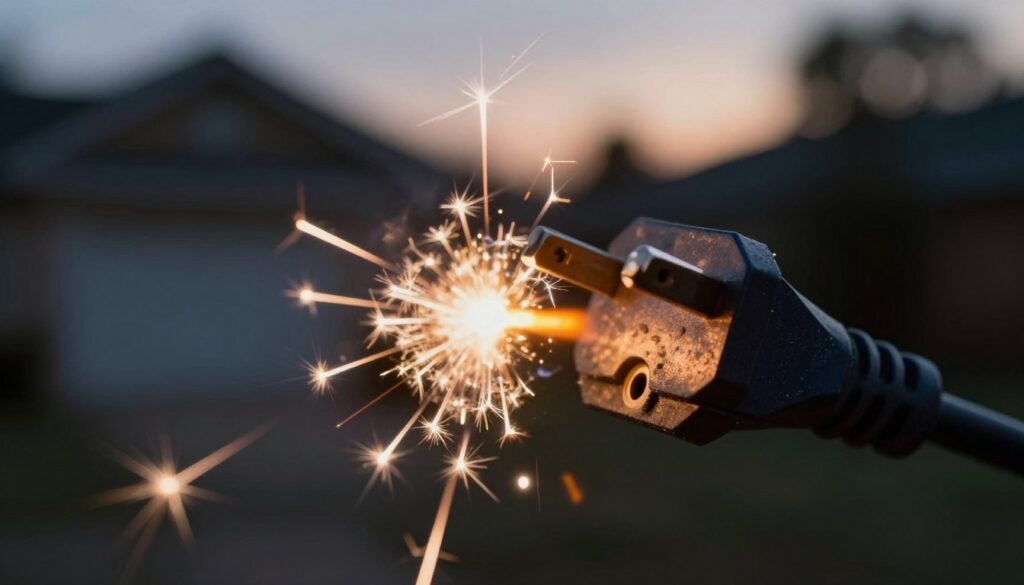
Have you noticed a sparking plug or a small spark from a wall outlet and wondered if it could be dangerous?
We see this often in South African homes and it is rarely just a nuisance.
In this guide we will explain why a sparking wall outlet or switch often signals heat build-up, loose connections or overload. These faults can escalate fast if left alone.
We’ll set clear, buyer-focused goals: what to check first, what parts to buy and when to call for professional fault-finding. Expect practical checks at the DB board and simple on-site cues you can use immediately.
We’ll also clarify confusing terms such as “sparking plug” versus “spark plug” and borrow sensible lessons from automotive quality to help you judge electrical accessories without hype.
Electrician Pretoria are the team to call when a repeating spark or odd circuit behaviour keeps returning; otherwise we help you decide between replace vs re-terminate – Contact Us!
Why A Sparking Plug Is A Serious Issue In Pretoria Homes
A visible spark at a wall outlet often points to a fault that needs quick attention.
What “sparking” can mean at a wall outlet
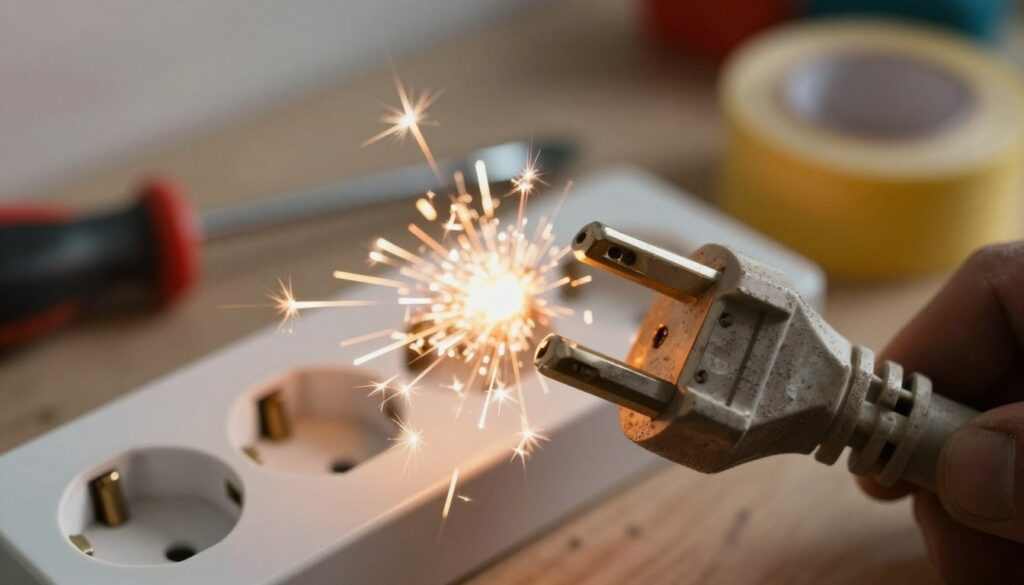
At a socket, a brief flash usually comes from poor contact pressure, loose terminals, overheating or arcing. At a switch the causes are different: worn contacts, switching heavy loads, or a damaged mechanism that no longer breaks circuit cleanly.
When a single spark is normal — and when it is not
A tiny one‑off spark can occur when inserting or removing a cord under load. This is usually a momentary contact issue. Repeated sparks, crackling or visible arcing show a persistent fault and need urgent action.
Fire and shock risks to prioritise
Faulty contacts create heat behind the faceplate and can degrade insulation. That leads to nuisance tripping, exposed conductors and, in the worst case, a fire in the wall box. Kitchens, garages and outdoor points are higher risk due to moisture and heavy use.
| Severity | Symptoms | Recommended next action |
|---|---|---|
| Low | Single brief spark on insertion | Unplug, monitor; replace accessory if repeats |
| Medium | Repeated arcing or crackling | Isolate circuit and call a qualified electrician |
| High | Buzzing, smoke or burning smell | Do not use; isolate power and seek immediate professional help |
Quick Safety Steps Before You Buy Anything – Sparking Plug
Safety first: before you head to the shop, take a short, repeatable routine at the distribution board (DB). This protects you and stops a minor fault from becoming worse.
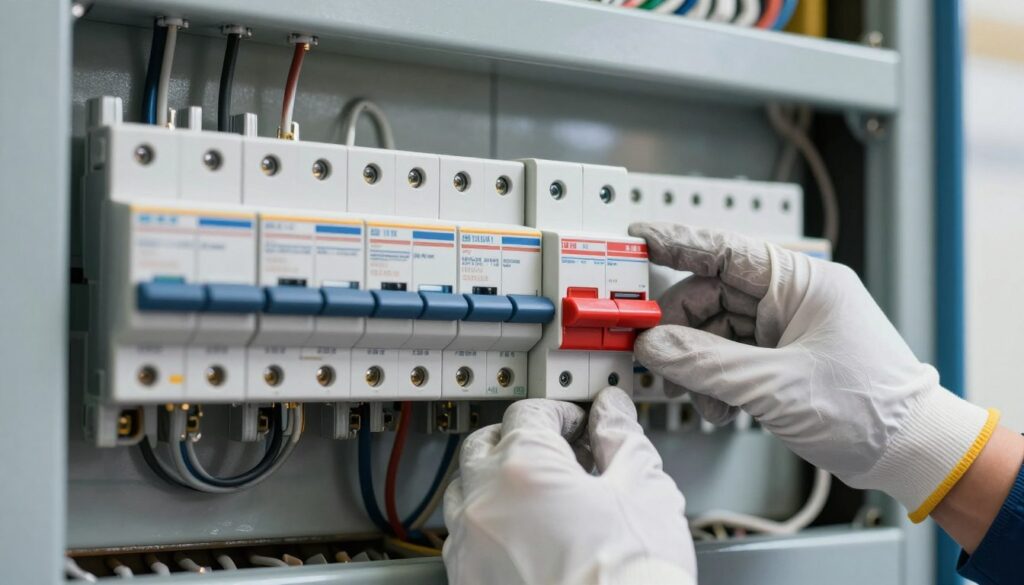
Isolating power at the DB board and verifying the circuit is dead
Isolate the correct circuit by switching off the relevant breaker. Remember, turning off a room light is not the same as isolating a socket circuit.
Always test before you touch. Use a non-contact tester or two-pole tester to confirm the feed is dead, then test again after isolation. Labelling can be wrong in older homes, so verify each time.
What to unplug immediately and what to leave alone
Unplug at once: high-draw appliances, heaters, or anything that gives off heat or a burning smell. These raise the risk of fire.
Leave alone: damaged faceplates, melted plugs or outlets that are hot to touch. If moving items is unsafe, isolate the circuit and call us.
| Step | What you’re confirming | Common mistake | Risk avoided |
|---|---|---|---|
| Identify breaker | Correct circuit label or location | Assuming labels are correct | Working on wrong live circuit |
| Switch off | Breaker in off position | Only switching room lights | Residual live sockets |
| Test before touch | No voltage present | Skipping repeat test | Contact shock or arc |
| Assess load items | Which appliances to unplug | Removing damaged items | Further heat damage or fire |
Common Causes Of Sparking At Plugs And Switches
Many repeat faults we attend begin as a tiny heat spot behind the faceplate that grows with use. Identifying the cause helps buyers decide whether they need replacement parts or a full re-termination.
Loose terminals and worn contacts
Loose conductors raise resistance and create local heating. A slightly loose screw can lead to repeated arcing under load.
Worn contacts develop pitting and intermittent connection, which gets worse over weeks.
Overloaded sockets and multi-plugs
High-draw appliances on the same circuit — kettles, heaters, microwaves and power tools — cause frequent faults. Multi-plugs and long extension leads increase risk and should be avoided for heavy loads.
Moisture ingress and outdoor points
Damp accelerates corrosion and reduces insulation. Outdoor and bathroom points often show faster degradation and need weatherproofing or replacement.
Heat damage and brittle insulation
Brown marks, melted plastic and arcing scars are signs replacement is required, not just tightening. These indicate insulation breakdown and increased fire risk.
| Cause | Typical symptom | Quick check | Likely fix |
|---|---|---|---|
| Loose terminal | Intermittent flash, warmth at faceplate | Gently wiggle plug and listen for crackle | Re‑terminate or replace socket |
| Worn contact | Flicker when switching or inserting plug | Visual pitting or black marks inside | Replace switch or socket |
| Overload | Frequent trips, hot cords | Check appliances on the circuit | Redistribute loads; install dedicated circuit |
| Moisture ingress | Corrosion, damp staining | Inspect outdoor/bathroom point | Fit IP‑rated unit and reseal |
What To Inspect On-Site In Minutes – Sparking Plug
A quick, focused inspection can reveal the earliest signs of a failing outlet without touching live parts. We keep checks simple and safe so you can act fast and phone us if needed.
Visual checklist: scorch marks, melted edges and discolouration
- Scorch or brown marks around the faceplate or wall — often the first visual warning.
- Yellowing or melted plastic at the socket mouth or around screw holes.
- Deformation or gaps where the faceplate meets the wall, and misshapen screw points.
Physical checklist: faceplate movement and bad fit
Only after isolating the circuit: gently press the faceplate. Any rocking or sideways movement usually means a loose back box or screws.
When inserting a domestic plug, a poor fit feels loose, uneven or wobbly. That “bad fit” often signals worn internal contacts and higher risk of arcing.
Smell and sound cues: crackling, buzzing and burning odours
- A burning or hot-plastic odour is a serious indicator — stop using the outlet and isolate the circuit.
- Buzzing or crackling on light insertion often indicates intermittent contact and arcing behind the plate.

“If you smell burning or hear a sustained buzz, treat it as urgent and book an inspection.”
| Inspection cue | What it usually means | Buy now vs book an inspection |
|---|---|---|
| Brown marks or melting | Overheating / insulation damage | Book an inspection |
| Wobbly faceplate | Loose mounting / back box | Repair or replace faceplate after isolation |
| Buzzing or crackle | Arcing or poor contact | Book an inspection |
Buyer’s Checklist For Safe Replacement Plugs And Switches – Sparking Plug
When buying a new socket or switch, match its rating to how you actually use the room.
Amperage and duty cycle: pick the correct amperage for the expected load. A kitchen or garage needs a higher-rated accessory than a bedroom. Duty cycle simply means how often and how heavily an outlet is used — choose heavy‑duty grades for frequent, high-watt use.
Build quality cues to check in-store
Look for solid terminals and visible clamps that hold conductors firmly. A rigid faceplate and clear moulding marks usually mean better long‑term stability.
Materials, safety shutters and compatibility
Prefer heat‑resistant materials and shuttered sockets where children are present. Verify the product fits common South African back boxes and supports local plug types without forcing the mechanism.
“A correct rating and a firm terminal beat a cheap faceplate every time.”
| Room | Typical loads | Recommended grade | Safety notes |
|---|---|---|---|
| Kitchen | Kettle, microwave, toaster | 20–32A heavy duty | Heat‑resistant, dedicated circuits |
| Home office | PC, monitor, printer | 16–20A standard/heavy | Surge protection advised |
| Garage/Workshop | Drill, compressor, heater | 20–32A industrial grade | Robust terminals, larger back box |
| Check | What to expect | Why it matters | |
| Amperage rating | Stamped on product | Prevents overload and spark | |
| Terminals & clamps | Solid metal, clear screw access | Reduces loosening over time | |
| Shutters & markings | Child‑safe shutters, standards mark | Safer homes; traceability | |
| Compatibility | Fits SA plug types and box depth | Avoids poor fit and stress on conductors |
Tools And Test Equipment We Recommend Before Attempting A Fix – Sparking Plug
Start with screening tools that keep you away from live parts, then confirm with reliable testers.
Non-contact voltage tester is ideal as a first screening step. It tells us a wire is live without touching metal. Follow that with a two-pole tester to confirm the circuit is dead before you remove a faceplate.
Insulated screwdrivers and torque discipline
Use insulated drivers and a sensible torque approach. Overtightening damages conductors; undertightening causes resistance, heat and a possible spark.
Multimeter basics
A digital multimeter is handy for supply presence and continuity checks. We advise only basic voltage and continuity checks and never probing live terminals unless you are trained.
Optional upgrades
Thermal checks spot hot spots fast. Labelling tools help map the DB board over time and cut confusion on future visits.
| Item | Approx cost | Use case | Risk reduced |
|---|---|---|---|
| Non-contact tester | R100–R400 | Quick live/dead check | Shock |
| Two-pole tester | R150–R500 | Confirm isolation | Misdiagnosis |
| Insulated screwdriver | R80–R300 | Terminal work | Arc / fire |
| Thermal camera (basic) | R1 200–R6 000 | Hotspot detection | Undetected overheating |
| Tool | What it prevents | Common misuse to avoid | |
| Non-contact tester | Unexpected live feed | Relying on it alone | |
| Two-pole tester | False safe reading | Testing on a switched-off, but not isolated, circuit | |
| Insulated screwdriver | Contact arc | Using wrong size or over-torquing |
“We recommend homeowners limit live probing and call a qualified electrician for any uncertain result.”
Choosing The Right Products: Sockets, Switches, And Protective Add-Ons – Sparking Plug
Choosing the right outlets and safety extras makes a real difference to household resilience and fire risk.
Standard sockets vs heavy-duty outlets
Standard sockets suit bedrooms and light‑use areas. They are fine for chargers and lamps.
Heavy‑duty outlets are essential for kitchens and workshops. They use sturdier contacts, higher current ratings and better heat tolerance.
Weatherproof and IP‑rated options
For patios and gardens pick IP‑rated units with good gaskets and secure lids. Check cable entry seals to keep moisture and dust out.
Surge protection: where it helps most
Surge units protect electronics in home offices and entertainment areas. They do not fix poor earthing or overloaded circuits, but they complement correct wiring.
Product selection guide by room
| Room | Recommended type | Key note |
|---|---|---|
| Bedroom | Standard 16A socket | Good for small appliances; surge for electronics |
| Kitchen | 20–32A heavy‑duty | Dedicated circuits for kettles and ovens |
| Garage | Industrial 20–32A | Dust‑resistant, robust terminals |
| Outdoors | IP44+ weatherproof | Gasketed lids; sealed entries |
Replacement vs re‑termination
| Sign | Action | Why |
|---|---|---|
| Brown marks, melted plastic | Replace | Insulation damage; fire risk |
| Loose screw, minor movement | Re‑terminate | Often fixes poor contact |
| Repeated arcing or black pitting | Replace | Contact damage beyond repair |
Protective add-ons checklist
| Device | Where to fit | When it’s worth it |
|---|---|---|
| Surge arrestor | DB board or outlet | Protects sensitive electronics |
| RCD/RCBO | DB board | Improves personal safety |
| Weatherproof cover | Outdoor sockets | Prevents moisture ingress |
“Match product grade to room duty rather than brand hype.”
Understanding “Spark Plug” Product Options And What They Teach Us About Quality – Sparking Plug
We draw a quick lesson from automotive ignition parts to help buyers judge material and build quality for electrical contacts at home.
Why materials matter
Metals and performance
Copper offers excellent conductivity but wears faster under harsh use. Nickel improves life modestly and sits in budget ranges.
Iridium and platinum resist wear and keep a steady gap for longer. That stability supports consistent ignition, cleaner combustion and small gains in fuel use.
What “pack of 4” pricing signals
Value and maintenance
Car parts are sold in four‑packs because replacing all cylinders together avoids uneven wear. Look at unit price, not headline pack price, when planning spares.
| Material | Durability | Performance note | Typical SA price band |
|---|---|---|---|
| Copper | Low | Good conductivity; short life | R150–R250 (pack of 4) |
| Nickel | Medium | Balanced cost and life | R200–R400 (pack of 4) |
| Platinum | High | Stable gap; longer service | R700–R1 200 (pack of 4) |
| Iridium | Very high | Best wear resistance; peak life | R1 000–R2 200 (pack of 4) |
“Assess metal, contact design and heat tolerance — not just brand or price.”
We close the loop: the same traits that make an ignition part reliable—material choice and robust contact design—should guide your choice of wall outlets and switches for safer, longer‑lasting home electrics.
Real-World Product Examples From South African Catalogues And Online Stores – Sparking Plug
We look at typical catalogue listings so you can compare everyday costs, longevity and buying traps before deciding.
Everyday baseline options
NGK BP6ES and NGK BPR6ES show up frequently as affordable, reliable choices for routine maintenance. In South African retail snapshots the BP6ES Copper pack of 4 lists around R170 and a Nickel variant near R150 when discounted. These are practical baseline items for most owners needing a quick, cost-effective replacement.
Premium iridium ranges
Iridium options command higher prices but offer longer life and better wear resistance. Examples include NGK BKR7EIX (≈R999) and higher-end NGK LKAR9BI9 (≈R2 190 with minor discounts). Denso’s IK20 Iridium has appeared heavily discounted in some listings (≈R200 from ≈R450). These units suit owners who prefer longevity over lowest upfront cost.
Discounts and “available online only” — what it means
Discounts can be genuine or calendar-led. Always check unit price per item, seller rating and warranty. “Available online only” often means longer lead times and limited returns at local counters. If you need rapid turnaround, factor delivery time and returns policy into the decision.
| Brand | Type / Material | Pack size | Indicative price |
|---|---|---|---|
| NGK | BP6ES (Copper) | Pack of 4 | R170 |
| NGK | BP6ES (Nickel) | Pack of 4 | R150 (discounted) |
| NGK | BKR7EIX (Iridium) | Single / pack | R999 |
| Denso | IK20 (Iridium) | Single | R200 (sale) |
| Question | Why it matters | ||
| Is this the correct fitment? | Prevents returns and wasted time | ||
| What is the returns policy? | Essential if item is faulty or wrong | ||
| How long is delivery? | Decide if downtime is acceptable | ||
| Seller authenticity / reviews? | Reduces counterfeit risk |
“Compare unit cost, fitment certainty and seller reliability rather than chasing headline discounts.”
How To Compare Products Properly (Without Overpaying) – Sparking Plug
A smart purchase begins by checking ratings and fit rather than the label on the box. We start with clear specs: material, current rating and fitment compatibility. That gives a true like‑for‑like basis to compare prices.

Match specifications, not brand names
Focus on: conductor material, heat tolerance and mounting depth. For vehicle parts this means the correct spark plug heat range; for home accessories it means rated amperage and robust terminals.
Cost versus longevity
Higher-grade items often cost more but last longer. We use the spark plug market as an analogy: iridium or platinum options extend service life and reduce repeat purchases. The same logic applies to heat-resistant, well‑clamped electrical fittings.
Multipack vs single purchase
Buy multipacks when you plan maintenance on several points or keep spares. Choose single units when diagnosing an unknown fault or when fitment is uncertain.
“Compare specs first; buy the grade that matches your duty cycle.”
| Spec | What to look for on label/
listing |
Why it matters | Question to ask before
buying |
|---|---|---|---|
| Material | Named metal (copper, nickel, iridium) | Durability and heat tolerance | Does this match my expected use? |
| Rating | Amperage / heat range / compatibility | Prevents overload and poor contact | Is the rating right for this room or engine? |
| Fitment | Back‑box depth, terminal type | Ensures a snug, low‑resistance connection | Will it fit without forcing the connection? |
| Packaging | Multipack or single; return policy | Spare availability and cost per unit | Do I need spares or a single replacement? |
DIY Replacement vs Calling Us: What’s Realistic And What’s Risky – Sparking Plug
A safe DIY swap is possible for simple, well‑isolated replacements; other faults need professional fault‑finding.
Simple replacements most homeowners can do safely
When DIY is reasonable: the faceplate is intact, the back box shows no burn marks, wiring colours are consistent and you have isolated and verified the circuit dead with a two‑pole tester.
Swap a like‑for‑like accessory only. Tighten terminals to correct torque and refit the faceplate snugly. Use insulated tools and check the outlet under no load.
Fault‑finding scenarios that require a qualified electrician
- Repeated spark or arcing after replacement
- Brown marks, melted plastic or heat inside the wall
- Uncertain earthing, mixed wiring colours or nuisance tripping
- Shared circuits with high‑draw appliances or unknown upstream faults
What we check when a replacement doesn’t stop the issue
We inspect conductor condition, correct termination and screw torque. We look for back‑box heat damage, signs of overload and whether the circuit is shared with heavy loads.
If faults persist we trace upstream at the DB and test under load to find intermittent contact or hidden faults.
| Symptom | Risk level | DIY allowed? | Why |
|---|---|---|---|
| Loose faceplate, no burn marks | Low | Yes | Simple re‑termination after isolation |
| Single brief flash on insertion | Medium | Maybe | Replace accessory; monitor for repeat |
| Repeated arcing / brown marks | High | No | Indicates internal damage; requires fault‑finding |
| Uncertain earthing or mixed wiring | High | No | Safety and code compliance needed |
“Searches for ‘spark plug’ often bring car parts; remember that household sparking is an electrical safety issue first, not an automotive analogy.”
Service Options In Pretoria And All Suburbs: What To Expect From Electrician Pretoria – Sparking Plug
We treat every call as a short investigation: isolate, inspect, test and fix or advise. Our aim is simple—resolve the fault safely and leave your circuit in reliable condition.
Typical call‑out flow: inspection, diagnosis, repair, and verification
Arrival and safety isolation: on arrival we isolate the circuit and confirm it is dead with a two‑pole tester.
Visual inspection: we check the faceplate, back box and any heat or smoke signs without disturbing live parts.
Testing and diagnosis: continuity, torque checks and load verification show whether a re‑termination will suffice or if replacement is safer.
Repair or replacement: we fit correctly rated accessories and ensure secure terminations to reduce repeat faults.
Verification: we confirm the accessory seats firmly, terminals are tight and there are no signs of overheating under light load.

What to share when booking
To speed diagnosis, send clear photos and a short symptom list when you book. We use that to bring the right parts and set expectations for the visit.
- Photos of the outlet or switch and DB board.
- Symptoms such as buzzing, tripping, smell or intermittent fault.
- Appliance in use when the issue occurred (if any).
- Suburb and access notes so we arrive prepared and on time.
| What to send | Why it matters | How it speeds diagnosis |
|---|---|---|
| Clear photos of outlet and DB | Shows visible damage or poor fit | We bring correct replacements and parts |
| Short symptom list | Focuses testing and prioritises safety | Reduces time on site and repeat visits |
| Which appliance was running | Helps identify overload or duty issues | We can advise dedicated circuits or upgrades |
| Exact suburb and access notes | Logistics and ETA accuracy | Faster arrival and correct tooling |
“We aim to make the process straightforward, transparent and focused on safety and reliability.”
Pricing Guidance For Buyers In South Africa – Sparking Plug
Budgeting for electrical work means planning for both parts and the unseen time a diagnosis takes.
Cost drivers: product grade, circuit complexity and access
Accessory grade affects cost directly. Basic faceplates are cheap; heavy‑duty, heat‑resistant units cost more but last longer.
Circuit complexity raises labour time. Shared circuits, mixed wiring or uncertain earthing require fault‑finding and add to the bill.
Access and remedial work can dominate price. Damaged back boxes, short wiring tails or concealed cabling need extra time and materials.
Budget vs mid-range vs premium purchase plan (what you get)
| Plan | Materials | Safety features | Best-fit rooms |
|---|---|---|---|
| Budget | Standard 16A socket | Basic shutters | Bedrooms, low-use areas |
| Mid-range | 16–20A sturdier terminals | Heat-resistant plastics, better clamps | Home office, lounge |
| Premium | Heavy‑duty 20–32A, superior contacts | High‑temp polymer, durable clamps, warranty | Kitchen, workshop, high‑duty circuits |
Hidden cost avoiders
| Preventive action | Why it saves you money | When to choose it |
|---|---|---|
| Replace damaged wiring tail | Avoids repeat call‑outs and overheating | Visible burn marks or brittle insulation |
| Upgrade back box | Makes terminations secure and future‑proofs work | Loose faceplate or shallow box |
| Proper diagnosis first | Stops part‑only fixes that fail again | Intermittent faults or unknown origin |
“Paying for correct diagnosis and safe installation usually beats saving a few rand on parts.”
Maintenance Habits That Reduce Future Sparks – Sparking Plug
A few practical checks each year make a big difference to electrical safety and reliability.
Load management: high-watt appliances and dedicated circuits
Spread kettles, heaters and other high-watt items across different circuits to avoid overload. We avoid daisy‑chained multi-plugs and limit the number of heavy devices on one feed.
Plan for dedicated circuits where kettles, ovens or workshop tools run frequently. That reduces stress on terminals and lowers the chance of heat‑related faults.
Routine checks for outdoor points and damp areas
Check outdoor and bathroom outlets after heavy rain or irrigation changes. Moisture speeds corrosion and weakens insulation.
Inspect seals, lids and visible corrosion. Replace or reseal weatherproof units when gaskets look tired.
Replacing ageing accessories before failure
Replace faceplates that rock, outlets that run warm or items with yellowing or black marks. Acting early stops a small issue turning into a visible spark or worse.
Keeping accessories fresh saves money: fewer call‑outs, fewer appliance interruptions and less chance of hidden wall damage.
“Routine care prevents most repeat faults and is far cheaper than emergency repairs.”
Maintenance schedule by area
| Area | What to check | How often |
|---|---|---|
| Kitchen | Faceplate warmth, discoloration, dedicated circuit load | 6 months |
| Bedrooms | Loose sockets, wobble on plug insertion | 12 months |
| Garage | Terminal tightness, visible wear | 6–12 months |
| Outdoors | Seals, corrosion, moisture ingress | After heavy rain & yearly |
Annual walk‑through checklist for landlords and homeowners:
- Look for discolouration or melted plastic.
- Test that faceplates sit firm and plugs fit snugly.
- Note any outlets that feel warm under light use.
- Record faults and replace items proactively.
What To Document After The Fix For Easier Future Servicing – Sparking Plug
Documenting repairs helps you and any electrician spot recurring faults quickly.
Why it matters: the next time a circuit trips, heats or is renovated, you’ll know what changed, when it was done and which circuit was affected. A short record saves time, reduces uncertainty and cuts the chance of repeat visits.
We recommend two simple steps: keep a short digital copy and a printed log near the DB in a dry place. Add photos of the DB schedule and the accessory packaging so specs match later work.
Home electrical logbook template
| Date | Circuit / DB label | Room / Location | Product fitted | Who did the work | Notes /
Symptoms |
|---|---|---|---|---|---|
| 2026-01-22 | R1 – Kitchen sockets | Kitchen – counter | 20A heavy-duty socket | Self / qualified electrician | Warm faceplate, repeated arcing; replaced and retested |
| 2026-01-15 | Lighting Ckt – Lounge | Lounge – ceiling | 16A switch | Qualified electrician | Buzzing on dimmer; tightened terminals and verified |
| 2025-11-02 | Garage – R3 | Garage – workbench | 32A industrial socket | Qualified electrician | New dedicated circuit for compressor; photo of packaging saved |
- Save images: photo of the DB schedule and the product label for quick spec checks.
- Keep it brief: a single sentence per entry is fine.
- Store two copies: one digital (phone or cloud) and one printed near the DB.
“A lightweight logbook turns guesswork into facts and speeds any future diagnosis.”
Buying Checklist You Can Screenshot Before Heading To The Shop – Sparking Plug
Before you step into the shop, keep a short visual checklist on your phone to avoid wrong buys. We made this to be practical and fast—use it while ordering online or standing in an aisle.
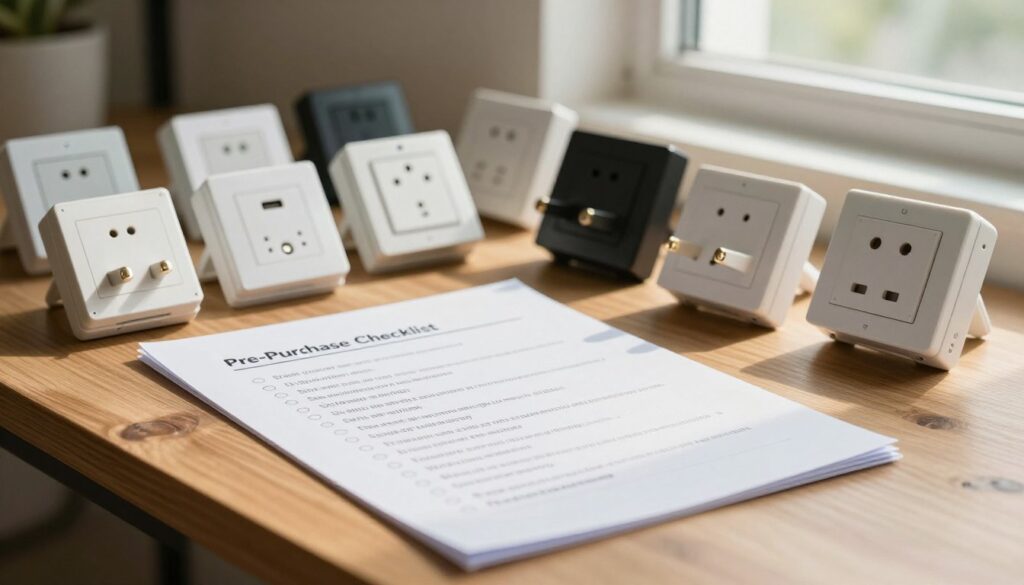
Quick steps to follow
Isolate and confirm the circuit dead at the DB before you remove the old faceplate. Take clear photos and a measurement of box depth to bring with you.
| Check | What to confirm | Bring to the shop | Action |
|---|---|---|---|
| Rating | Amperage matches room duty (16A / 20–32A) | Photo of old rating or appliance list | Buy correct grade, not cheapest |
| Fitment | Back-box depth and terminal type | Photo of back box depth and terminal layout | Match depth and terminal style |
| Tools & safety | Two‑pole tester; insulated screwdriver | List of tools you’ll need at home | Buy or borrow before attempting work |
| Inspect old accessory | Look for warmth, cracks, loose screws | Photo of faceplate and wiring tail | Decide replace vs re‑terminate |
| Stop & call for help | Heavy scorching, melted insulation or persistent burning smell | Photos and clear symptom notes | Do not attempt DIY; phone a qualified electrician |
“Buy the right grade for the room—especially in kitchens and workshops—so you avoid repeat visits.”
Conclusion – Sparking Plug
A small electrical flash can hide a growing fault; respond with simple checks and sensible buys. Treat any visible arc, noise or burning smell as a safety signal, isolate the circuit and inspect for heat damage before you replace anything.
Buy by rating, build quality and fitment rather than price alone. Catalogue listings show wide quality and price spreads, so compare specs not just sticker cost. Use the room‑based selection guide and the replace‑vs‑reterminate table in this content to act quickly and confidently.
Think of a spark plug as an analogy: material and design affect life and costs. For a verified fix or repeat faults, contact Electrician Pretoria and we will inspect, repair and confirm the issue is resolved.
When in doubt, pause and get professional help — safer than risking shock, fire or hidden wall damage.

